
Privacy-Focused Search Engine Sees 30% Surge as Users Reject Mandatory AI Integration
The recent transformation of mainstream search engines toward AI-first experiences has triggered an unexpected migration pattern among users seeking alternatives. This shift represents more than just consumer preference—it highlights a fundamental divide in how people want to interact with search technology.
A privacy-focused search platform has reported significant growth following major search engine announcements about mandatory AI integration. The alternative search service saw U.S. app installations jump 18.1% week-over-week during late May, with peak growth reaching 30.5%. iOS users showed even stronger adoption rates, with installation growth averaging 33% and peaking at nearly 70%.
The AI Resistance Movement
What strikes me most about this trend is how it reveals the disconnect between what tech companies think users want and what they actually desire. The assumption that everyone welcomes AI-powered search results appears fundamentally flawed. Many users clearly prefer traditional search methods and resent having AI functionality forced upon them without choice.
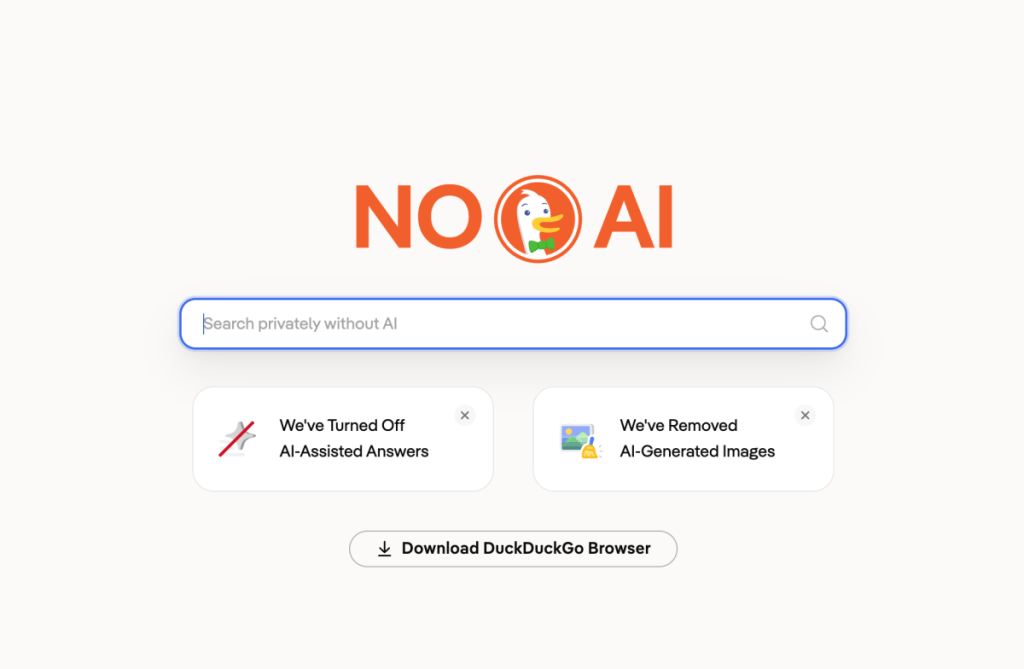
The alternative search engine’s AI-free page experienced 22.7% week-over-week growth, demonstrating that a significant portion of users actively seeks to avoid AI features entirely. This page disables AI-assisted answers and AI-generated images by default, catering to users who want pure, unfiltered search results.
Who Benefits from This Shift
This migration primarily benefits users who value control over their search experience and those concerned about privacy implications of AI-powered search. Researchers, journalists, and professionals who need unbiased information sources will find particular value in AI-free search options. Additionally, users frustrated with inaccurate AI responses or those who simply prefer traditional blue links over conversational AI interfaces represent the core demographic driving this change.
However, this approach isn’t suitable for everyone. Users who genuinely appreciate AI assistance for complex queries or those who enjoy conversational search experiences may find traditional search methods limiting. The key insight here is that choice matters more than the technology itself.
The Privacy Advantage
What makes this alternative particularly compelling is its privacy-first approach. The service strips user IP addresses before requests reach AI model providers, deletes conversations within 30 days, and prevents chats from being used for training purposes. This represents a stark contrast to data-hungry mainstream search engines.
The company offers its own AI product through a separate platform, providing access to various models including Claude, Llama, Mistral, and GPT variants. Importantly, this AI functionality remains optional rather than mandatory, allowing users to choose their level of AI engagement.
Market Implications
From my perspective, this user migration signals a broader market correction. The tech industry’s rush to integrate AI everywhere has overlooked a crucial segment of users who value simplicity and control. While AI undoubtedly enhances many search experiences, forcing it upon all users represents poor product strategy.
The sustained growth over six consecutive days, including typically slow Memorial Day weekend traffic, suggests this isn’t just a temporary reaction but a genuine shift in user preferences. The alternative search engine’s growth from its traditional 2% market share, while still modest, indicates room for competition in what has long been considered a monopolistic market.
The Choice Factor
Perhaps the most significant aspect of this trend is how it emphasizes user agency. The alternative search platform offers both AI-powered features and AI-free options, letting users decide their preferred experience. This approach contrasts sharply with the all-or-nothing AI integration strategy adopted by mainstream search engines.
The company’s Search Assist feature, similar to AI overviews, and an AI Image Filter that removes AI-generated content from results, both rank among their most popular features despite serving opposite philosophies. This paradox reinforces that users want choice above all else.
For businesses and content creators, this shift presents both challenges and opportunities. Those who relied heavily on traditional search visibility may find refuge in platforms that maintain conventional search result formats. However, the overall fragmentation of search behavior requires more diverse SEO strategies.
This migration ultimately reflects a healthy market response to forced technological adoption. Users are voting with their downloads, demonstrating that innovation without choice isn’t truly innovative at all.