
Government Commits £1 Million to Restore Golden Eagles in Northern England
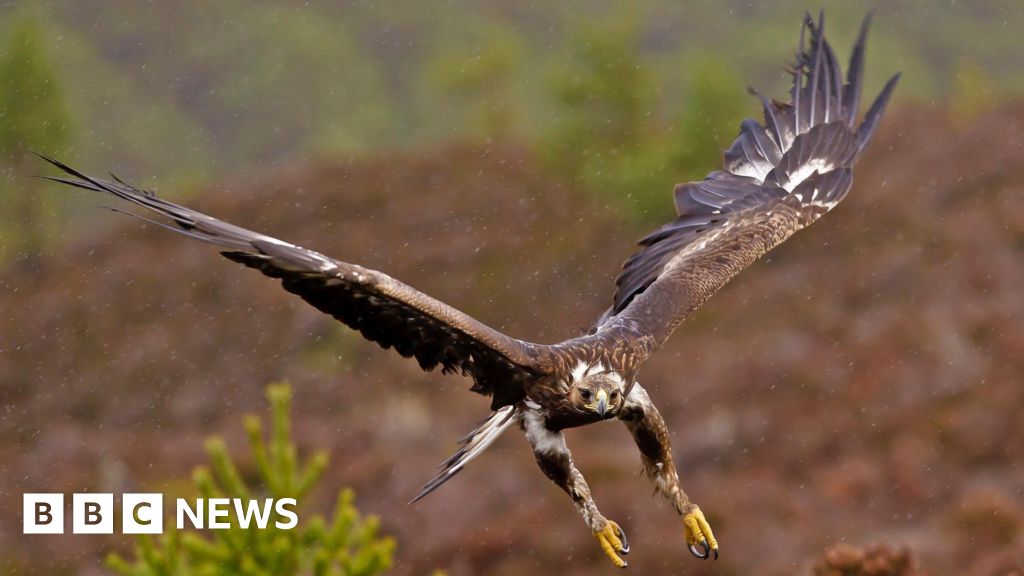
The British government has announced a significant investment of £1 million to support the reestablishment of golden eagles in English territory, with the first birds potentially arriving as soon as next year.
These magnificent raptors, Britain’s second-largest predatory birds, disappeared from England during the 1800s due to intensive hunting campaigns that viewed them as threats to livestock and game birds.
The initiative will be spearheaded by Forestry England working alongside conservation organizations that have already achieved success in reintroducing the species near the Scottish border region.
According to Restoring Upland Nature, the conservation group leading the effort, there has been substantial public enthusiasm for bringing back these “impressive” birds, though agricultural communities have expressed concerns about potential impacts on their livestock, particularly young sheep.
Remarkable Predators with Unique Capabilities
Golden eagles rank among Earth’s swiftest creatures, capable of reaching speeds up to 200 miles per hour during hunting dives. Their extraordinary eyesight allows them to detect small prey like rabbits from distances of three miles away.
Despite their status as apex predators, these birds faced complete elimination from England and Wales due to perceived threats to farm animals and game birds raised for hunting.
Following extensive environmental research by Forestry England and the successful restoration efforts along the Scottish border, government officials are now supporting a parallel conservation program in Northumberland.
Environment Secretary Emma Reynolds emphasized the species’ ecological importance, noting that beyond their impressive two-meter wingspan, golden eagles serve as a keystone species crucial for broader ecosystem recovery efforts.
Addressing Britain’s Biodiversity Crisis
The United Kingdom faces severe nature depletion, with 2023 research conducted by non-governmental organizations and academic institutions revealing that one-sixth of all species now face extinction risks.
Government authorities have supported various species reintroduction programs in recent years as part of comprehensive efforts to reverse declining biodiversity trends, including initiatives to restore pine martens, beavers, and whitefaced darter dragonflies.
Ed Parr Ferris, who manages species recovery programs at Forestry England, explained that reintroducing golden eagles could help regulate mesopredators—animals occupying middle positions in food webs—such as foxes and badgers.
Golden eagles are impressive and beautiful birds, representing one of our few remaining apex predators in Britain. Any predator creates systemic pressure that balances populations of other animals in that environment, creating opportunities for rarer species to survive and flourish.
Strategic Location Selection
The comprehensive study conducted by Forestry England evaluated 28 potential sites for establishing new populations. Eight locations were identified as offering suitable climate conditions, appropriate landscapes, and minimal disturbance potential, with Northumberland emerging as the preferred choice.
Additional suitable locations include:
- North Pennines
- The Lakes region
- Yorkshire Dales
- Bowland area
- South Pennines
- North York Moors
- Southwest England
Over the past eight years, 28 young birds from Scottish Highland and Orkney Island populations have been successfully relocated to the Scottish border area and established thriving communities.
While some of these birds have begun temporary migrations into English territory, researchers estimate that without additional intervention, natural expansion and settlement further south would require approximately 20 years.
Implementation Timeline and Community Engagement
The three-year, £1 million program will be managed by Restoring Upland Nature, the organization responsible for the successful Scottish border reestablishment project.
Dr. Cat Barlow, the organization’s chief executive, explained that the initiative will begin with extensive public consultation involving landowners and farmers, with the possibility of introducing young birds as early as next summer.
She emphasized that this project serves broader purposes beyond species conservation, helping engage diverse audiences in ecosystem recovery discussions.
While it’s challenging to generate excitement about peat restoration, something like a golden eagle can captivate new audiences and help them understand how entire ecosystems function together.
Addressing Agricultural Concerns
However, Professor Davy McCracken from Scotland’s Rural College suggested that 18 months might be insufficient for proper consultation, noting that land managers and farmers face intensive seasonal work periods that could limit their ability to participate effectively in consultation processes.
William Maughan, representing the National Farmers Union North Regional Board and working as a farmer himself, stressed the importance of “thorough, meaningful and clear” engagement with agricultural communities for project success.
He emphasized that farmers cannot bear the costs, risks, and responsibilities associated with poorly executed reintroduction programs.
Eagle reintroduction efforts in Britain have not always received positive reception. Following sea eagle reintroduction—the country’s only other apex predator—Scottish farmers reported abandoning hill farms after these birds significantly impacted lamb populations. Welsh farming organizations have raised similar concerns regarding golden eagle risks.
Mitigating Livestock Impact
Ed Parr Ferris distinguished golden eagles from sea eagles, noting their different behavioral patterns. While acknowledging that golden eagles occasionally take small lambs as part of their diet, he emphasized this occurs rarely, with carrion forming a much more significant portion of their food sources.
The feasibility study indicates current research estimates suggest golden eagles would account for between 0.15% and 3% of total lamb losses within their hunting territories.
Dr. Barlow acknowledged that changing perceptions about golden eagles presents challenges but pointed to the Scottish project’s success in building community support. Initially facing significant trust deficits between shooting communities and conservationists, the project gained acceptance by hiring a retired gamekeeper, ultimately leading to shooting estates actively helping construct artificial nesting sites.
Professor McCracken suggested that farmers might find some reassurance in the Scottish project’s success while understanding ongoing concerns related to discussions about reintroducing other carnivorous predators like lynx.
He cautioned against examining species reintroduction in isolation, noting that while individual species might not create major impacts, cumulative effects from multiple reintroduced species could prove significant.
Ongoing Conservation Challenges
The potential for human-wildlife conflict remains a persistent concern. In February, one of the birds relocated to the Scottish border region was discovered with pellet wounds, highlighting ongoing threats.
Government officials have chosen not to disclose the specific Northumberland release location being considered, prioritizing the safety and security of the birds involved in this crucial conservation effort.